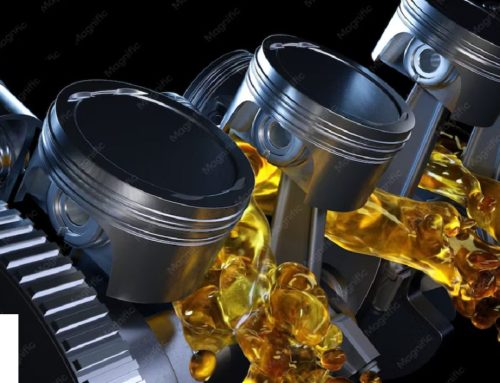


Diesel engines work under demanding conditions: high combustion pressures, sustained loads, elevated temperatures, soot generation and, in newer vehicles, increasingly sophisticated exhaust after-treatment systems. The engine oil therefore has to do far more than simply reduce friction. It must help control deposits, manage soot, resist oxidation, protect against wear and support the durability of emission-control hardware.
That is why the API service category printed on a heavy-duty diesel engine oil matters. Among the most widely encountered categories are API CK-4, CJ-4 and CI-4. They represent different generations of diesel engine-oil performance and were developed around changing engine technology, emissions requirements and operating conditions.
So what is the difference between CK-4, CJ-4 and CI-4? Can CK-4 replace CJ-4? Is CI-4 still relevant? And which specification should a fleet operator, workshop or equipment owner choose?
This guide explains the differences in practical terms and shows why the correct choice depends on the engine manufacturer’s recommendation, emission system, fuel quality, viscosity requirement and operating environment.
What Do API Diesel Engine Oil Categories Mean?
API stands for the American Petroleum Institute. Its engine-oil service categories provide recognized performance classifications for lubricants used in gasoline and diesel engines. Heavy-duty diesel categories use the letter “C”, historically associated with commercial/compression-ignition service.
A category is not simply a marketing label. It represents a defined level of lubricant performance against tests and requirements covering areas such as wear, oxidation, deposits, soot handling and viscosity control. As diesel engine design and emissions technology have advanced, newer categories have been introduced to address new stresses and performance demands.
For diesel engines, however, “newer” should not be interpreted as “automatically correct for every engine.” API itself advises users to follow the engine or vehicle manufacturer’s recommended oil performance level. Backward compatibility is common across several C categories, but application-specific requirements, viscosity and OEM approvals still matter.
API CK-4: The Modern Heavy-Duty Standard
API CK-4 was introduced for high-speed four-stroke diesel engines designed around 2017 model-year on-highway emissions requirements and Tier 4 non-road applications, while also covering many earlier diesel engines. It was developed for a generation of engines operating with tighter emissions control, higher thermal stress and demanding durability expectations.
Compared with earlier categories, CK-4 places strong emphasis on oxidation stability, resistance to viscosity loss through shear, aeration control, wear protection, piston deposit control and management of soot-related viscosity increase. These characteristics are particularly important in modern heavy-duty engines where oil can be exposed to sustained high temperatures and extended service demands.
CK-4 oils are also designed to support engines equipped with advanced exhaust after-treatment systems. Depending on the lubricant formulation and OEM requirement, these may include diesel particulate filters (DPF), diesel oxidation catalysts (DOC) and selective catalytic reduction (SCR) systems.
For fleets operating newer trucks, buses, construction equipment or other high-output diesel machinery, CK-4 is therefore an important specification to understand.
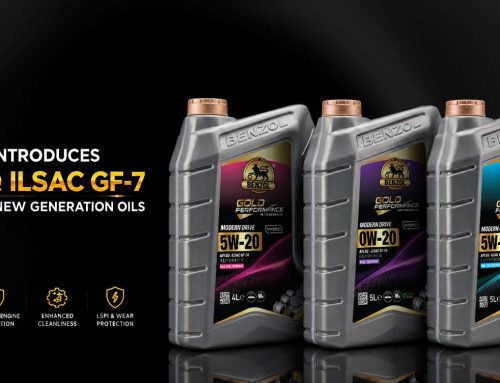
BENZOL reference: SHPD Fleet Turbo SAE 10W-40 API CK-4/SN ACEA E11 is formulated for heavy-duty diesel service and compatibility with DPF, DOC and SCR after-treatment systems.
API CJ-4: Proven Performance for Earlier Emissions Generations
API CJ-4 predates CK-4 and was developed for high-speed four-stroke diesel engines meeting 2010 model-year on-highway and Tier 4 non-road emissions requirements, as well as many earlier engines. It became an important specification during the expansion of diesel particulate filters and advanced emissions hardware.
CJ-4 oils provide protection against wear, deposits, oxidation, soot-related thickening and viscosity loss while helping sustain emission-control system durability. They remain relevant wherever an engine manufacturer specifies CJ-4 or where a correctly approved later category is permitted as a replacement.
For mixed-age fleets, CJ-4 may still appear in maintenance manuals, procurement specifications and workshop requirements. The key is not to assume that an older category is “bad”; rather, it was designed for a different generation of performance requirements.
BENZOL reference: SHPD Fleet Turbo SAE 5W-30 API CJ-4/SN ACEA E11 uses low-SAPS technology and is positioned for modern diesel applications including Euro VI requirements.
API CI-4: Still Relevant in Many Established Diesel Fleets
API CI-4 was introduced in 2002 for high-speed four-stroke diesel engines designed around 2004 emissions requirements. A major technical focus was durability in engines using exhaust gas recirculation (EGR), a technology that can increase soot loading and place additional demands on the lubricant.
CI-4 oils are therefore associated with robust soot handling, wear control and protection in older heavy-duty diesel platforms. In many markets, significant populations of trucks, buses, agricultural machinery, generators, construction equipment and off-highway vehicles remain in service from generations where CI-4 is specified.
This makes CI-4 commercially and technically relevant, particularly in established fleets where the engine manufacturer calls for it and where operating conditions, fuel quality and maintenance practices align with that specification.
However, an older engine specification should never be selected only because an engine has high mileage. The correct API category and SAE viscosity grade should be based on the OEM recommendation and the engine’s actual operating requirements.
BENZOL reference: SHPD Fleet Turbo SAE 15W-40 API CI-4/SL ACEA E7 is intended for naturally aspirated and turbocharged four-stroke diesel engines across transport and commercial applications.
CK-4 vs CJ-4 vs CI-4: Quick Comparison
| Factor | API CK-4 | API CJ-4 | API CI-4 |
| Generation focus | 2017-era on-highway / Tier 4 and earlier | 2010-era on-highway / Tier 4 and earlier | 2004-era diesel engines |
| After-treatment focus | Strong support for advanced DPF and other after-treatment systems | Designed for emissions-era engines including particulate-filter applications | Primarily associated with EGR-era engine durability |
| Oxidation control | Enhanced | Strong | Robust for its generation |
| Shear / viscosity control | Enhanced requirements | Strong | Designed for earlier engine demands |
| Soot management | Enhanced | Strong | Important focus, especially with EGR |
| Backward compatibility | Exceeds performance criteria of CJ-4, CI-4 PLUS, CI-4 and CH-4 per API | Exceeds CI-4 PLUS, CI-4, CH-4 and earlier listed categories per API | Can replace several earlier categories listed by API |
| Best selection rule | Use when specified/allowed by OEM | Use when specified/allowed by OEM | Use when specified by OEM and appropriate for application |
Is API CK-4 Backward Compatible with CJ-4 and CI-4?
In many applications, yes. API states that CK-4 oils exceed the performance criteria of CJ-4, CI-4 with CI-4 PLUS, CI-4 and CH-4 and can effectively lubricate engines calling for those categories. That makes CK-4 useful for fleet rationalization where a newer oil can service multiple generations of equipment.
But backward compatibility should not be treated as permission to ignore the engine manual. The API performance category is only one part of the lubricant requirement. The OEM may also specify a particular SAE viscosity, ACEA class or proprietary approval. Oil-drain intervals can also depend on engine design, duty cycle, fuel sulfur level and lubricant approval.
The safest rule is simple: use a lubricant that meets the required API category, viscosity grade and applicable OEM specifications for the engine.
Authority source: API Oil Categories
Why DPF, DOC and SCR Compatibility Matters
Modern diesel engines do not end at the combustion chamber. Exhaust gases pass through after-treatment systems designed to reduce particulate matter and regulated emissions. DPFs trap soot, DOCs help oxidize pollutants, and SCR systems use a reductant to reduce nitrogen oxides.
Lubricant chemistry can affect the long-term performance of these systems. For engines fitted with sensitive after-treatment hardware, the correct low-ash or low-SAPS formulation and the correct OEM/API/ACEA specification become particularly important. Using an unsuitable oil may contribute to ash accumulation or compromise the intended durability of the emissions system.
This is one reason why simply choosing an oil by viscosity—such as “15W-40” or “10W-40”—is not enough. Two products can share the same SAE grade while carrying very different performance specifications and suitability for emission-controlled engines.
API Category and SAE Viscosity Are Not the Same Thing
API CK-4, CJ-4 and CI-4 describe performance levels. SAE 5W-30, 10W-30, 10W-40, 15W-40 and 20W-50 describe viscosity grades. They answer different questions.
The API category tells you what performance standard the oil is designed to meet. The SAE grade describes how the lubricant behaves within defined viscosity limits at low and high temperatures. An engine may require, for example, API CK-4 in SAE 10W-30, while another application may call for CK-4 in SAE 15W-40 or another grade.
Never upgrade or downgrade viscosity merely because a different grade appears “stronger.” The correct viscosity depends on engine design, ambient temperature, operating duty and OEM recommendation.
How to Choose the Right Diesel Engine Oil
- Start with the engine manufacturer’s specification. Check the owner’s manual, workshop documentation or approved lubricant list. Identify the required API category, SAE viscosity and any OEM approval.
- Identify the emissions system. If the engine uses DPF, DOC, SCR or other after-treatment hardware, confirm that the lubricant is designed for the required emissions-system compatibility.
- Match the viscosity grade. Consider the OEM viscosity chart and operating temperature range rather than selecting viscosity by habit.
- Consider duty cycle. Long-haul trucks, urban stop-start fleets, mining equipment, construction machinery and standby generators impose different thermal, soot and load patterns.
- Consider fuel sulfur and drain interval. API notes that fuel sulfur level can affect after-treatment durability and oil-drain recommendations for CK-4 and CJ-4 applications. Follow OEM guidance.
- Check OEM specifications. API performance alone may not satisfy a specific engine maker’s approval requirement. Verify the complete product data sheet.
Which Category Is Best for Fleet Operators?
For fleet operators, lubricant selection is also an inventory-management decision. A well-planned specification strategy can reduce workshop complexity, simplify technician training and lower the chance of filling an engine with the wrong oil.
Where the vehicle makers permit CK-4 across several generations, a fleet may be able to rationalize part of its lubricant inventory. The exercise should be done model by model, however, because a mixed fleet can still require different viscosity grades, ACEA classes or proprietary OEM approvals.
A practical fleet matrix should list each engine family, required performance standard, permitted viscosity grades, drain interval and any after-treatment restrictions. This turns lubricant selection from a purchasing habit into a controlled maintenance process.
Applications: Trucks, Buses, Construction and Off-Highway Equipment
Heavy-duty diesel lubrication covers very different operating profiles. Long-haul trucks may run for hours at stable load, city buses experience repeated idling and thermal cycling, construction machines work under dust and shock loading, and generators can remain at substantial load for extended periods.
Those differences affect oxidation, soot loading, contamination and oil temperature. A lubricant that is appropriate for one duty cycle should not be assumed to be ideal for another simply because both engines are diesel. Product selection should account for the equipment maker’s specification together with the actual service environment.
Common Mistakes When Selecting Heavy-Duty Diesel Oil
- Choosing only by SAE viscosity and ignoring API/OEM performance requirements.
- Assuming every newer specification is automatically suitable for every older engine.
- Using an oil intended for older diesel technology in a modern DPF-equipped engine without checking compatibility.
- Extending drain intervals without oil analysis or OEM approval.
- Assuming high mileage automatically means a thicker viscosity is required.
- Treating all 15W-40 or all 10W-40 oils as technically equivalent.
- Ignoring fuel quality, sulfur level and severe-duty operating conditions.
BENZOL® Heavy-Duty Diesel Engine Oils
The BENZOL® heavy-duty diesel portfolio spans several API generations and viscosity grades, allowing distributors, workshops and fleet operators to match lubricant performance to different engine populations. The range includes CK-4 solutions such as 5W-30, 10W-30 and 10W-40, alongside CJ-4 and CI-4 products for applications that call for those standards.
Selected BENZOL® CK-4 and CJ-4 formulations are positioned for emission-controlled diesel engines, while CI-4 products address established heavy-duty applications. Individual product data sheets should be used to confirm ACEA classifications, OEM performance claims and after-treatment suitability before use.
Explore BENZOL® Diesel Engine Oils
Frequently Asked Questions
What is the main difference between API CK-4 and CJ-4?
CK-4 is a later heavy-duty diesel category with enhanced requirements in areas including oxidation stability, shear stability and aeration control. API states that CK-4 exceeds the performance criteria of CJ-4 and several earlier C categories.
Can I use CK-4 instead of CJ-4?
Yes. API lists CK-4 as exceeding CJ-4 performance criteria, so it can serve many CJ-4 applications. Confirm the vehicle maker’s viscosity and approval requirements before changing products.
Can CK-4 replace CI-4?
At the API category level, CK-4 exceeds CI-4 performance criteria. Check the engine manual for viscosity and any OEM-specific requirement before substitution.
Is CI-4 obsolete?
No. API currently lists CI-4 as a current diesel service category. It remains relevant for engines designed around earlier emissions generations and is widely encountered in established fleets.
Is CK-4 suitable for DPF-equipped engines?
CK-4 was developed with modern emission-control durability in mind and is especially effective where particulate filters and advanced after-treatment systems are used. The complete product and OEM specification must still be checked.
What does CI-4 PLUS mean?
CI-4 PLUS identifies CI-4 oils meeting additional performance requirements, particularly around soot-related viscosity increase and viscosity loss through shear. Later CK-4 and CJ-4 categories incorporate CI-4 PLUS performance requirements.
Is 15W-40 the same as CK-4?
No. 15W-40 is an SAE viscosity grade; CK-4 is an API performance category. A product may be SAE 15W-40 and carry CK-4, CJ-4, CI-4 or another performance specification.
Which diesel oil is best for trucks?
There is no single best grade for every truck. Choose the oil that satisfies the engine maker’s performance specification and viscosity requirement for the vehicle’s climate and duty cycle.
Does a thicker diesel oil provide better protection?
Not automatically. An unnecessarily thick oil can affect cold flow and may not match the engine design. Use the viscosity recommended by the manufacturer.
Should fleets use the same oil in every truck?
Sometimes. Standardizing lubricants can simplify fleet maintenance, but only after every engine family has been checked for compatible performance standards, viscosities and approvals.
Does fuel sulfur affect diesel engine oil selection?
Yes. Fuel sulfur can influence oil-drain guidance and after-treatment considerations in some applications. Follow the engine manufacturer’s recommendations for the fuel being used.
What is the difference between API and ACEA specifications?
API and ACEA are different performance-classification systems. Many heavy-duty oils carry both, but the exact requirements are not interchangeable. Follow the specifications listed by the engine manufacturer.
Final Takeaway
The progression from CI-4 to CJ-4 and CK-4 reflects the changing demands placed on heavy-duty diesel lubricants as engine technology and emissions controls have evolved. The practical lesson is straightforward: the API category tells only part of the story.
For a reliable selection, match the engine maker’s required performance standard with the correct SAE viscosity and any specified ACEA or OEM requirements, then account for the vehicle’s after-treatment system and duty cycle. That approach gives fleets and workshops a technically sound basis for choosing diesel engine oil rather than relying on viscosity, vehicle age or habit alone.