

Introduction
Engine oil viscosity is one of the most searched lubrication topics because it directly affects fuel economy, wear protection, emissions performance and engine life. Modern engines are engineered with tight tolerances, turbochargers, variable valve timing systems and hybrid operating strategies that demand carefully selected lubricants. Choosing the wrong viscosity can compromise performance, while selecting the correct one helps maximise efficiency and durability.
This guide explains viscosity ratings, compares the four most common grades—0W-20, 5W-30, 5W-40 and 10W-40—and provides practical recommendations for different climates, vehicle types and driving conditions. It is written to answer both beginner and expert questions while remaining technically accurate.
Understanding SAE Viscosity Ratings
SAE J300 defines engine oil viscosity grades. The first number followed by W (Winter) indicates low-temperature flow performance. The second number represents the oil’s viscosity at operating temperature.
A lower winter rating allows faster circulation during cold starts. A higher operating-temperature grade provides a thicker lubricating film under high load and heat. Importantly, viscosity is not an indicator of oil quality. A premium 0W-20 meeting API SQ may outperform an outdated 20W-50 in wear protection despite being thinner.
How Multi-grade Oils Work
Modern synthetic oils use advanced base stocks and viscosity index improvers to remain fluid at low temperatures while maintaining protection at operating temperature. This enables year-round use without seasonal oil changes in most climates.
Detailed Comparison
0W-20: Optimised for fuel economy, hybrids and modern passenger cars. Excellent cold-start protection and reduced internal friction.
5W-30: The most versatile global viscosity. Suitable for many Japanese, Korean, European and American vehicles. Excellent balance between efficiency and durability.
5W-40: Favoured by many European turbocharged and performance engines requiring greater high-temperature film strength.
10W-40: Frequently recommended for older engines, higher-mileage vehicles and certain commercial or naturally aspirated applications where specified by the manufacturer.
Climate Recommendations
Cold climates: 0W-20 or 0W-30 are often preferred due to superior cold flow.
Temperate climates: 5W-30 suits the widest range of vehicles.
Hot climates: 5W-40 is common where manufacturers approve it, particularly for turbocharged engines operating under sustained heat.
Always follow the vehicle manufacturer’s specification before changing viscosity.
Engine Type Recommendations
Turbocharged engines generate extreme heat and benefit from premium synthetic oils meeting API SQ or the latest ACEA requirements. Naturally aspirated engines may use a wider range depending on design.
Hybrid vehicles benefit from low-viscosity oils because their engines repeatedly stop and restart. Rapid lubrication during every restart is essential.
High-mileage vehicles should not automatically receive thicker oil. The correct viscosity depends on manufacturer approval, engine condition and oil consumption.
Regional Manufacturer Guidance
Japanese manufacturers frequently specify 0W-20 or 5W-30 for efficiency.
Many European manufacturers specify ACEA A3/B4, C3, C5 or C6 oils with viscosities such as 0W-20, 0W-30, 5W-30 or 5W-40 depending on engine family.
American manufacturers increasingly recommend lower-viscosity API SQ / ILSAC GF-7 oils for modern gasoline engines.
API SQ, ILSAC GF-7 and ACEA
API SQ is the latest passenger-car gasoline engine oil specification. It improves oxidation resistance, timing-chain wear protection, LSPI protection, sludge control and fuel economy compared with previous categories.
ILSAC GF-7 complements API SQ by focusing on fuel efficiency, emissions-system compatibility and protection for modern gasoline direct injection engines.
ACEA specifications provide additional European performance requirements including extended drain capability, high-speed durability and emissions-system compatibility.
Common Myths
Myth: Thicker oil always protects better.
Reality: Protection depends on using the manufacturer-approved viscosity and specification.
Myth: Older cars always need thicker oil.
Reality: Many older vehicles continue to perform best on the original viscosity recommendation.
Myth: Synthetic oil causes leaks.
Reality: Synthetic oils do not create leaks; they may reveal pre-existing seal wear.
Mistakes to Avoid
- Choosing oil based only on viscosity.
• Ignoring API, ILSAC or ACEA approvals.
• Mixing incompatible specifications.
• Extending drain intervals beyond manufacturer guidance.
• Assuming hot climates always require thicker oil.
BENZOL Recommendation
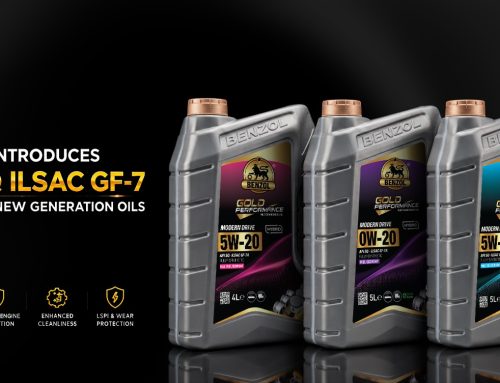
BENZOL premium passenger car engine oils are engineered to meet the latest API SQ, ILSAC GF-7 and leading ACEA performance standards. The portfolio covers modern hybrids, turbocharged engines, European passenger cars and high-performance applications, helping drivers achieve outstanding protection, cleanliness and efficiency.
Internal Linking Opportunities
Suggested links:
• API SQ Engine Oils
• Fully Synthetic Engine Oils
• Oil Advisor Tool
• Passenger Car Motor Oils
• Engine Oil Buying Guide
• Why API SQ Matters
Decision Matrix
Latest hybrid → 0W-20
Modern family car → 5W-30
Performance turbocharged vehicle → 5W-40
Older manufacturer-approved engine → 10W-40
Schema-ready FAQ (20 Questions)
- What does 0W-20 mean?
Answer: Follow the vehicle manufacturer’s approved viscosity and performance specification. Select a premium engine oil meeting the latest applicable API, ILSAC and/or ACEA requirements.
- Is 5W-30 better than 5W-40?
Answer: Follow the vehicle manufacturer’s approved viscosity and performance specification. Select a premium engine oil meeting the latest applicable API, ILSAC and/or ACEA requirements.
- Can I mix 5W-30 and 5W-40?
Answer: Follow the vehicle manufacturer’s approved viscosity and performance specification. Select a premium engine oil meeting the latest applicable API, ILSAC and/or ACEA requirements.
- Can I use 10W-40 instead of 5W-30?
Answer: Follow the vehicle manufacturer’s approved viscosity and performance specification. Select a premium engine oil meeting the latest applicable API, ILSAC and/or ACEA requirements.
- Which oil is best for hot climates?
Answer: Follow the vehicle manufacturer’s approved viscosity and performance specification. Select a premium engine oil meeting the latest applicable API, ILSAC and/or ACEA requirements.
- Which viscosity is best for cold weather?
Answer: Follow the vehicle manufacturer’s approved viscosity and performance specification. Select a premium engine oil meeting the latest applicable API, ILSAC and/or ACEA requirements.
- Does thicker oil reduce oil consumption?
Answer: Follow the vehicle manufacturer’s approved viscosity and performance specification. Select a premium engine oil meeting the latest applicable API, ILSAC and/or ACEA requirements.
- Is API SQ better than API SP?
Answer: Follow the vehicle manufacturer’s approved viscosity and performance specification. Select a premium engine oil meeting the latest applicable API, ILSAC and/or ACEA requirements.
- What is ILSAC GF-7?
Answer: Follow the vehicle manufacturer’s approved viscosity and performance specification. Select a premium engine oil meeting the latest applicable API, ILSAC and/or ACEA requirements.
- What is ACEA?
Answer: Follow the vehicle manufacturer’s approved viscosity and performance specification. Select a premium engine oil meeting the latest applicable API, ILSAC and/or ACEA requirements.
- Which oil is best for turbo engines?
Answer: Follow the vehicle manufacturer’s approved viscosity and performance specification. Select a premium engine oil meeting the latest applicable API, ILSAC and/or ACEA requirements.
- Which oil is best for hybrids?
Answer: Follow the vehicle manufacturer’s approved viscosity and performance specification. Select a premium engine oil meeting the latest applicable API, ILSAC and/or ACEA requirements.
- Can synthetic oil improve fuel economy?
Answer: Follow the vehicle manufacturer’s approved viscosity and performance specification. Select a premium engine oil meeting the latest applicable API, ILSAC and/or ACEA requirements.
- When should I change engine oil?
Answer: Follow the vehicle manufacturer’s approved viscosity and performance specification. Select a premium engine oil meeting the latest applicable API, ILSAC and/or ACEA requirements.
- Does viscosity affect emissions?
Answer: Follow the vehicle manufacturer’s approved viscosity and performance specification. Select a premium engine oil meeting the latest applicable API, ILSAC and/or ACEA requirements.
- Can the wrong viscosity damage an engine?
Answer: Follow the vehicle manufacturer’s approved viscosity and performance specification. Select a premium engine oil meeting the latest applicable API, ILSAC and/or ACEA requirements.
- Do European cars need different oil?
Answer: Follow the vehicle manufacturer’s approved viscosity and performance specification. Select a premium engine oil meeting the latest applicable API, ILSAC and/or ACEA requirements.
- Is 0W-20 too thin?
Answer: Follow the vehicle manufacturer’s approved viscosity and performance specification. Select a premium engine oil meeting the latest applicable API, ILSAC and/or ACEA requirements.
- Can I switch viscosity?
Answer: Follow the vehicle manufacturer’s approved viscosity and performance specification. Select a premium engine oil meeting the latest applicable API, ILSAC and/or ACEA requirements.
- How do I choose the right engine oil?
Answer: Follow the vehicle manufacturer’s approved viscosity and performance specification. Select a premium engine oil meeting the latest applicable API, ILSAC and/or ACEA requirements.
Conclusion
Selecting the correct viscosity is about matching the lubricant to the engine—not simply choosing the thickest oil available. Combining the correct SAE viscosity with the latest API SQ, ILSAC GF-7 and ACEA performance levels helps maximise efficiency, durability and protection. Premium synthetic engine oils from BENZOL are engineered to deliver reliable performance across diverse climates and driving conditions.