

Choosing engine oil has become more complex than simply selecting a viscosity such as 5W-30 or 0W-20. Modern European vehicles can require a specific ACEA performance category, a particular OEM approval and an oil chemistry designed around the engine’s emissions-control system. Two bottles carrying exactly the same SAE viscosity can therefore be technically very different products.
ACEA classifications help define those differences. They set European performance requirements for engine oils used across petrol and light-duty diesel applications, including categories designed for engines equipped with catalytic converters, diesel particulate filters and other after-treatment technologies.
For motorists, workshops and distributors, understanding labels such as ACEA A3/B4, C2, C3, C4, C5 and C6 makes it easier to understand why the correct oil matters — and why viscosity alone is never enough.
What Does ACEA Mean in Engine Oil?
ACEA is the European Automobile Manufacturers’ Association. Its European Oil Sequences define performance requirements for engine lubricants and are widely referenced by European vehicle manufacturers.
An ACEA category describes a performance profile rather than a viscosity. SAE 5W-30 tells you about the oil’s viscosity behaviour; ACEA C3, for example, tells you that the lubricant has been formulated and tested against a particular set of European performance requirements. A vehicle manufacturer may then add its own proprietary approval — such as an MB, VW, BMW, Renault or Porsche specification — on top of the ACEA requirement.
This is why the complete specification on the vehicle handbook or lubricant recommendation should be followed rather than choosing oil by viscosity or brand familiarity alone.
The Two Groups Most Car Owners Will Encounter: A/B and C
For passenger cars and light-duty vehicles, two broad ACEA families are especially relevant. A/B categories cover oils for petrol and light-duty diesel engines, while C categories are catalyst-compatible oils developed for vehicles using exhaust after-treatment systems.
The C categories are often described through SAPS levels. SAPS refers to sulphated ash, phosphorus and sulphur — lubricant components that must be carefully controlled because excessive levels can affect the long-term performance of certain particulate filters and catalysts.
However, “lower SAPS” does not automatically mean “better.” Each engine is designed around a particular lubricant performance envelope. The correct ACEA category is the one specified or permitted by the vehicle manufacturer.
ACEA A3/B4 Explained
ACEA A3/B4 is associated with high-performance petrol and direct-injection diesel engine applications requiring a robust, higher-HTHS lubricant profile. It is commonly encountered in European vehicles and remains relevant for many engines where the manufacturer specifies A3/B4 together with its own approval.
A3/B4 should not be confused with the catalyst-compatible C categories. A vehicle requiring a low- or mid-SAPS C-category oil may not be correctly served by an A3/B4 oil even when the SAE viscosity is identical.
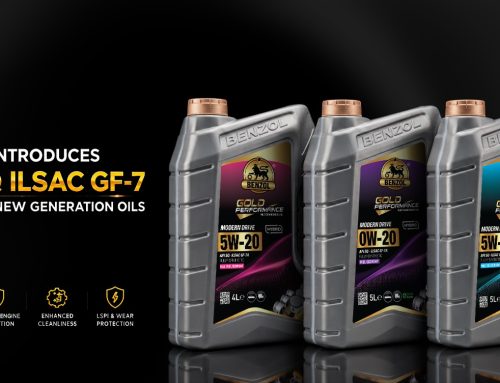
BENZOL® offers A3/B4 products within the Modern Drive range, including SAE 5W-30 and SAE 5W-40 formulations carrying European OEM performance specifications. These products illustrate why the specification printed after the viscosity is critical: a 5W-30 A3/B4 and a 5W-30 C3 are not interchangeable simply because both are 5W-30.
ACEA C2 Explained
ACEA C2 is a catalyst-compatible category designed around reduced SAPS and fuel-economy performance, with a lower HTHS viscosity requirement than C3. It is used in specific petrol and diesel engines where the manufacturer has designed the lubrication system around this performance profile.
The lower HTHS characteristic is important: C2 should not be substituted into an engine that requires the higher HTHS protection profile of C3 unless the vehicle manufacturer explicitly permits it.
A relevant BENZOL® example is Modern Drive SAE 5W-30 API SN/CF ACEA C2, a fully synthetic formulation carrying ACEA C2 together with specifications including Renault RN 0700 and PSA B71 2290/B71 2297.
View BENZOL® Modern Drive SAE 5W-30 ACEA C2
ACEA C3 Explained
ACEA C3 is one of the most widely encountered catalyst-compatible European oil categories. It combines controlled SAPS chemistry with a higher HTHS viscosity requirement than C2, making it suitable for many performance-oriented petrol and diesel engines equipped with after-treatment systems where C3 is specified.
Because C3 is so common, it is easy to assume that any C3 oil will suit any European vehicle. That is not the case. OEM approvals remain crucial. The manufacturer may require a specific Mercedes-Benz, Volkswagen, BMW, Porsche, GM or Renault performance specification in addition to ACEA C3.
BENZOL® Modern Drive SAE 5W-30 API SN/CF ACEA C3 / C2-C3 products demonstrate this layered specification approach, with selected formulations carrying requirements such as MB 229.51/229.52, VW 504.00/507.00, BMW LL-04, GM dexos2 and Porsche C30.
View BENZOL® Modern Drive SAE 5W-30 ACEA C2/C3
ACEA C4 Explained
ACEA C4 is a low-SAPS category developed for specific catalyst- and particulate-filter-equipped petrol and diesel engines. It has historically been particularly associated with certain Renault applications and is not a universal replacement for C2 or C3.
The distinction matters because a workshop may have several 5W-30 products on the shelf that look similar from the viscosity label alone. A C4 oil can have a very different specification profile from a C2 or C3 oil.
BENZOL® Modern Drive SAE 5W-30 API SN/CF ACEA C4 is a useful example: the product carries ACEA C4 together with Renault RN 0720 and MB 226.51 requirements, demonstrating how an ACEA category often works alongside manufacturer-specific specifications.
View BENZOL® Modern Drive SAE 5W-30 ACEA C4
ACEA C5 Explained
ACEA C5 addresses modern catalyst-compatible engines designed to use lower-viscosity, fuel-economy-oriented lubricants. Compared with C3, it permits a lower HTHS viscosity and is therefore intended only for engines specifically designed for this type of oil.
C5 frequently appears with modern low-viscosity grades such as 0W-20 and 5W-20. These oils can help reduce internal friction and support fuel-efficiency objectives, but they should not be used in an engine that requires a higher-viscosity or higher-HTHS specification simply because the technology is newer.
Within the BENZOL® range, Modern Drive SAE 0W-20 API SP ACEA C5 and Modern Drive SAE 5W-20 API SP ACEA C5 provide clear examples of this newer low-viscosity approach.
View BENZOL® Modern Drive SAE 0W-20 API SP ACEA C5
ACEA C6 Explained
ACEA C6 is a newer catalyst-compatible category for engines designed around low-viscosity, fuel-economy lubricants. It builds on the low-HTHS concept while adding performance requirements relevant to newer engine technologies, including protection considerations associated with modern turbocharged direct-injection petrol engines.
C6 should be treated as an application-specific specification rather than a universal upgrade from C5. The vehicle manufacturer must permit the category and viscosity. Where a BENZOL® product is selected for a C6 application, the product’s current technical data sheet and the vehicle-specific recommendation should be checked before use.
This is an important editorial distinction: the purpose of this guide is to explain C6, not to imply that every ACEA category discussed necessarily has a one-to-one BENZOL product counterpart on the current website.
ACEA A3/B4 vs C2 vs C3 vs C4 vs C5 vs C6: Quick Comparison
| ACEA | Broad Character | SAPS / After-treatment | HTHS Direction | Typical Selection Logic |
| A3/B4 | Robust petrol/light-duty diesel performance | Not a C-category catalyst-compatible profile | Higher | Use where A3/B4 and relevant OEM spec are required |
| C2 | Fuel-economy catalyst-compatible | Reduced SAPS | Lower than C3 | Only where C2 is specified/permitted |
| C3 | Catalyst-compatible with robust HTHS profile | Controlled SAPS | Higher than C2/C5 | Common in many European OEM applications |
| C4 | Application-specific low-SAPS | Low SAPS | Higher profile | Often tied to specific OEM requirements |
| C5 | Low-viscosity fuel-economy category | Controlled SAPS | Lower | For engines specifically designed for C5 |
| C6 | Newer low-viscosity catalyst-compatible category | Controlled SAPS | Lower | For newer engines specifically permitting C6 |
C2 vs C3: Why This Comparison Causes So Much Confusion
C2 and C3 can both appear in 5W-30 oils, and both are catalyst-compatible categories. The crucial difference is their HTHS viscosity requirement and the engine designs they are intended to serve. C2 is associated with a lower HTHS threshold and fuel-economy objectives; C3 uses a higher HTHS profile.
Some carefully formulated products can carry both C2 and C3 claims when they satisfy the applicable performance requirements. BENZOL® Modern Drive SAE 5W-30 API SN/CF ACEA C2/C3 is an example. But that does not mean C2 and C3 are identical specifications. The vehicle’s required OEM approval remains the deciding factor.
C5 vs C6: Is C6 Simply the Newer Version?
C6 is newer, but “newer” should not be interpreted as “automatically interchangeable.” Both C5 and C6 target low-viscosity, fuel-economy-oriented catalyst-compatible applications, but C6 adds requirements aimed at newer engine technologies.
A vehicle designed for C5 should continue to use an oil permitted by its manufacturer. Likewise, C6 should only be used where the vehicle documentation allows it. This principle applies throughout the ACEA system: specifications are engineering requirements, not a simple ranking from old to new.
What Are Low-SAPS and Mid-SAPS Engine Oils?
SAPS stands for sulphated ash, phosphorus and sulphur. These components are closely managed in catalyst-compatible engine oils because lubricant-derived ash and certain chemical elements can affect the long-term operation of diesel particulate filters and catalytic after-treatment systems.
The C categories control these parameters at different levels while also defining other performance requirements. For drivers, the practical point is straightforward: if the manufacturer requires a particular C-category oil, use a lubricant carrying that category and the necessary OEM approval. Do not choose a “low-SAPS” oil merely because the term sounds more advanced.
ACEA vs API: What Is the Difference?
ACEA and API are separate engine-oil performance systems. API categories are widely associated with North American gasoline and diesel service classifications, while ACEA Oil Sequences reflect European engine and vehicle requirements.
A modern oil may carry both systems — for example, an API SP classification together with ACEA C5 — because the formulation has been designed to satisfy both sets of applicable requirements. Neither system should be treated as a translation of the other.
For European vehicles, the ACEA category and the vehicle manufacturer’s own approval can be particularly important when selecting the correct lubricant.
Why OEM Approvals Matter as Much as the ACEA Category
ACEA provides a common performance framework, but European manufacturers often add their own engine tests, durability requirements and application rules. That is why labels and technical data sheets may also show specifications such as Mercedes-Benz 229.5 or 229.52, VW 504.00/507.00, BMW Longlife-04, Renault RN 0720, Porsche C30 or other OEM requirements.
Two oils can both carry ACEA C3 yet have different OEM approval portfolios. If the vehicle manual specifies an OEM standard, that requirement should be checked rather than relying on ACEA C3 alone.
This also explains why a lubricant recommendation database is useful: vehicle selection involves matching the engine, model year, viscosity, ACEA category and manufacturer requirement rather than choosing from one specification in isolation.
BENZOL® Engine Oils by ACEA Specification
BENZOL® offers passenger-car engine oils across several ACEA categories, allowing the product range to serve different European engine technologies and viscosity requirements. The examples below are intended to help readers connect the specification theory with real products; the vehicle manufacturer’s recommendation remains the final selection authority.
| ACEA | BENZOL® Example | Why It Is Relevant |
| A3/B4 | Modern Drive SAE 5W-30 API SN/CF ACEA A3/B4 | Higher-HTHS European petrol/light-duty diesel performance; selected OEM requirements. |
| C2 | Modern Drive SAE 5W-30 API SN/CF ACEA C2 | Catalyst-compatible, fuel-economy-oriented C2 application. |
| C3 | Modern Drive SAE 5W-30 API SN/CF ACEA C3 / C2-C3 | Catalyst-compatible European applications with a higher HTHS profile and broad OEM specification coverage. |
| C4 | Modern Drive SAE 5W-30 API SN/CF ACEA C4 | Low-SAPS application including Renault RN 0720 / MB 226.51 requirements. |
| C5 | Modern Drive SAE 0W-20 API SP ACEA C5; Modern Drive SAE 5W-20 API SP ACEA C5 | Modern low-viscosity, fuel-economy-oriented applications. |
| C6 | Check current BENZOL® Oil Advisor / product data | Use only where the current vehicle-specific recommendation and product specification confirm suitability. |
Not Sure Which ACEA Specification Your Car Requires?
This is where specification education should turn into accurate vehicle selection. A driver may understand the difference between C2 and C3 and still not know which category, viscosity and OEM approval applies to a particular engine.
The BENZOL® Oil Advisor provides a vehicle-based route to suitable lubricant recommendations. Powered by Olyslager lubricant data, the service is designed to help motorists, workshops and distributors move from a vehicle selection to the relevant BENZOL® lubricant recommendation instead of guessing from viscosity alone.
That is especially valuable with European vehicles, where the same model family may use different engines, model years and manufacturer specifications. The Oil Advisor should therefore be used as a practical selection aid alongside the vehicle manufacturer’s service information and the current BENZOL® product data sheet.
CTA: FIND THE RIGHT OIL FOR YOUR VEHICLE → BENZOL® OIL ADVISOR
How to Choose the Correct ACEA Engine Oil
- Check the vehicle handbook. Identify the required SAE viscosity, ACEA category and OEM specification.
- Do not choose by viscosity alone. A 5W-30 C2, 5W-30 C3 and 5W-30 C4 can be designed for very different applications.
- Check the emissions system. DPF- and catalyst-equipped engines can require carefully controlled SAPS chemistry.
- Verify the OEM specification. ACEA may be only part of the requirement.
- Use a vehicle-specific lubricant advisor. A model/engine-based recommendation reduces the risk of selecting from specification labels alone.
- Confirm against the current product data sheet. Specifications can evolve, so use current technical documentation before service or purchase.
Frequently Asked Questions
What does ACEA mean on engine oil?
ACEA identifies European engine-oil performance categories. It is separate from SAE viscosity and from manufacturer-specific approvals.
What is the difference between ACEA A3/B4 and C3?
A3/B4 is a high-performance petrol/light-duty diesel category, while C3 is a catalyst-compatible category with controlled SAPS chemistry for engines requiring that type of after-treatment-compatible oil.
Can I use C3 instead of C2?
Not automatically. C2 and C3 have different HTHS requirements. Use the category and OEM specification permitted by the vehicle manufacturer.
Can one oil be ACEA C2 and C3?
Some formulations can meet the applicable requirements for both claims. The vehicle’s OEM specification still needs to match.
Is ACEA C4 better than C3?
No. C4 is not a quality ranking above C3; it is a different performance profile for particular applications.
What is the difference between C5 and C6?
Both target low-viscosity catalyst-compatible applications, while C6 adds requirements relevant to newer engine technologies. They are not automatically interchangeable.
Does ACEA C5 mean the oil must be 0W-20?
No. ACEA and SAE describe different things. C5 is a performance category and can appear in more than one suitable viscosity grade.
Is low-SAPS oil always better?
No. SAPS chemistry must match the engine and after-treatment requirements. The correct manufacturer-specified oil is better than simply choosing the lowest-SAPS product.
Do I need to follow the OEM approval if the ACEA category matches?
Yes, where the manufacturer specifies an OEM standard. The ACEA category alone may not satisfy the complete requirement.
How can I find the correct BENZOL oil for my car?
Use the BENZOL® Oil Advisor to identify vehicle-based recommendations, then confirm the viscosity and specifications against the current product data sheet and vehicle service information.
Final Takeaway
ACEA A3/B4, C2, C3, C4, C5 and C6 are not competing labels in a simple good-better-best hierarchy. Each represents a different lubricant performance profile designed around particular engine technologies, viscosity strategies and emissions-system requirements.
The most important lesson is that viscosity alone cannot identify the correct engine oil. The ACEA category, OEM specification and vehicle recommendation must be considered together.
BENZOL® supports this selection process with a broad European-specification engine-oil portfolio and the BENZOL® Oil Advisor, giving motorists, workshops and distributors a practical route from technical specification to vehicle-specific lubricant selection.