
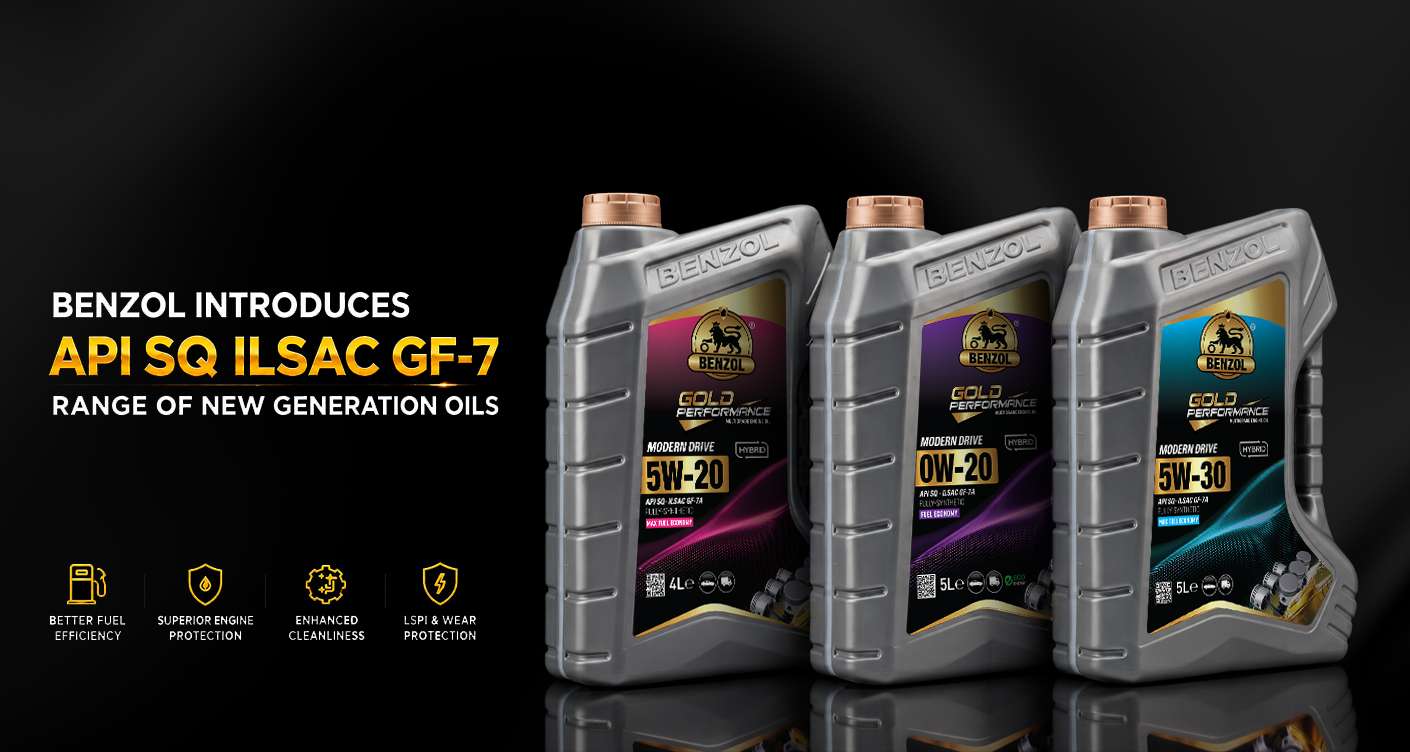
The transition from API SP to API SQ represents the latest evolution in gasoline engine oil performance standards. While API SP introduced critical protections against Low-Speed Pre-Ignition (LSPI), timing chain wear, and deposits in modern turbocharged engines, API SQ builds upon these foundations with enhanced requirements aligned with today’s engine technologies, fuel economy targets, and operating conditions. Understanding the differences between these standards offers valuable insight into how lubricant technology continues to evolve in tandem with modern automotive engineering.
API SQ vs API SP briefly –
| Performance Area | API SP | API SQ |
| Introduction | 2020 | 2025 |
| LSPI Protection | Required | Enhanced and maintained |
| Timing Chain Wear Protection | Required | Further strengthened |
| Oxidation Resistance | High | Improved |
| Deposit Control | High | Enhanced |
| Fuel Economy Performance | Strong | Improved alignment with latest requirements |
| Compatibility with Modern TGDI Engines | Yes | Optimized for latest generations |
| Support for Emerging Powertrain Technologies | Good | Enhanced |
Introduction
Most of us don’t think much about engine oil, but it’s one of the most important parts of keeping our cars running smoothly. The more the engines get smaller, more powerful, and more efficient, not to mention the rise of hybrids and electric vehicles, the demand-son engine oil keep growing.
The introduction of API SQ marks another important milestone in this evolution.
Many industry discussions focus on whether API SQ is “better” than API SP. However, that question oversimplifies the purpose of lubricant specifications. The real story lies in understanding why standards evolve, what technical challenges they are designed to address, and how lubricant formulation continues to adapt to changing engine technologies.
To appreciate the significance of API SQ, it is important first to understand how engine oil standards develop and why they continue to change.
How API Engine Oil Standards Evolve
The American Petroleum Institute (API) periodically updates engine oil performance categories to reflect advances in engine design, emissions regulations, fuel economy requirements, and lubricant technology.
Over the years, gasoline engine categories have progressed through several generations:
- API SJ
- API SL
- API SM
- API SN
- API SN Plus
- API SP
- API SQ
Each category introduces new performance requirements based on real-world engineering challenges identified by vehicle manufacturers, lubricant formulators, and testing organizations.
Modern engines operate under conditions that would have been uncommon two decades ago:
- Higher combustion pressures
- Smaller engine displacements
- Turbocharging
- Direct fuel injection
- Start-stop operation
- Hybrid-assisted powertrains
- Lower viscosity lubricants
These developments create new stresses on engine oils, requiring standards to evolve accordingly.
What Was API SP Designed to Solve?
Introduced in 2020, API SP was developed to address several emerging challenges affecting modern gasoline engines.
- Low-Speed Pre-Ignition (LSPI)
One of the most significant concerns for turbocharged gasoline direct injection (TGDI) engines was LSPI. Unlike normal combustion, LSPI occurs unexpectedly before the spark event and can create severe pressure spikes inside the cylinder.
Repeated LSPI events can potentially cause:
- Piston damage
- Connecting rod damage
- Increased engine stress
API SP introduced testing requirements specifically designed to ensure lubricants helped mitigate LSPI risks.
- Timing Chain Wear
Modern engines increasingly rely on compact timing chain systems operating under demanding conditions.
Excessive timing chain wear can affect engine timing accuracy and long-term durability.
API SP introduced dedicated testing to evaluate timing chain protection performance.
- Oxidation and Deposit Control
Higher operating temperatures place greater demands on lubricant stability.
API SP oils were required to demonstrate improved resistance to:
- Oxidation
- Sludge formation
- Piston deposits
- Viscosity increases
These improvements contributed to better engine cleanliness and reliability.
Why Was API SQ Introduced?
While API SP represented a major advancement, engine technology has continued to evolve.
Several industry trends influenced the development of API SQ.
Increasing Fuel Economy Targets
Global regulators continue to push for lower emissions and improved fuel efficiency.
Lubricants now play an increasingly important role in supporting these objectives.
Even small reductions in friction can contribute to measurable efficiency gains across millions of vehicles.
Continued Evolution of TGDI Engines
Turbocharged gasoline direct injection engines remain widely adopted by manufacturers seeking improved power density and fuel efficiency.
These engines continue to place unique demands on lubricants, particularly in areas such as:
- Deposit control
- Wear protection
- Oxidation resistance
- LSPI prevention
- Greater Emphasis on Stop-Start Operation
Modern vehicles frequently operate under stop-start conditions, creating different lubricant performance demands than traditional driving cycles.
Frequent engine restarts place greater emphasis on:
- Rapid lubrication
- Deposit management
- Long-term oxidation stability
- Longer Durability Expectations
Vehicle owners increasingly expect engines to maintain performance over extended service lives.This trend has encouraged continued improvement in lubricant protection systems.
API SQ vs API SP: Detailed Technical Comparison
Wear Protection
| Characteristic | API SP | API SQ |
| Cam Wear Protection | Strong | Enhanced |
| Valvetrain Protection | Strong | Enhanced |
| General Wear Control | High | Improved |
Wear protection remains one of the most important functions of engine oil.
API SQ builds upon the protection already established under API SP by maintaining increasingly demanding performance requirements.
Oxidation Resistance
| Characteristic | API SP | API SQ |
| Oxidation Stability | High | Enhanced |
| Viscosity Control | Strong | Improved |
| Long-Term Stability | Good | Better |
Oxidation occurs naturally as lubricants are exposed to heat and oxygen.
Improved oxidation resistance helps preserve lubricant performance throughout the oil’s service life.
Deposit Control
| Characteristic | API SP | API SQ |
| Piston Cleanliness | Strong | Enhanced |
| Sludge Prevention | Strong | Enhanced |
| Deposit Resistance | High | Improved |
Cleaner engines generally maintain efficiency and performance more effectively over time.
Timing Chain Wear Protection
| Characteristic | API SP | API SQ |
| Timing Chain Protection | Required | Further Enhanced |
| Wear Resistance | Strong | Improved |
Timing chain protection remains an important area of focus as engine designs continue to evolve.
Fuel Economy Performance
| Characteristic | API SP | API SQ |
| Fuel Economy Support | Strong | Enhanced |
| Friction Management | Advanced | Further Optimized |
Modern lubricant formulations increasingly enhance overall vehicle efficiency through advanced friction-management technologies.
LSPI Protection
| Characteristic | API SP | API SQ |
| LSPI Mitigation | Required | Maintained and Enhanced |
| TGDI Engine Support | Strong | Improved |
Protection against LSPI remains one of the most important requirements for modern gasoline engine oils.
Is API SQ backward compatible with API SP?
One of the most common questions surrounding new lubricant specifications concerns backward compatibility.
In general, API SQ is designed to supersede API SP within the API gasoline engine oil category system.
However, it is important to understand that engine oil selection should never rely solely on API categories.
Vehicle manufacturers may also specify:
- OEM approvals
- ACEA requirements
- Manufacturer-specific standards
- Specific viscosity grades
These requirements remain equally important when selecting engine oil.
API categories complement these requirements rather than replace them.
Relationship Between API SQ and ILSAC GF-7
API SQ was introduced alongside the latest ILSAC GF-7 standard.
While API and ILSAC specifications are closely related, they serve slightly different purposes.
ILSAC GF-7A
Designed for traditional SAE viscosity grades commonly used in modern passenger vehicles.
Focus areas include:
- Fuel economy
- Wear protection
- Deposit control
- Emissions system compatibility
ILSAC GF-7B
Developed specifically for ultra-low viscosity grades.
GF-7B helps manufacturers achieve maximum fuel efficiency while meeting protection requirements.
How New API Standards Are Developed
The development of new lubricant specifications is a multi-year process involving collaboration across the automotive and lubricant industries.
Participants typically include:
- Vehicle manufacturers
- Lubricant companies
- Additive suppliers
- Testing laboratories
- Industry associations
Extensive engine testing is conducted before a new category is approved.
These evaluations may include assessments of:
- Wear protection
- Oxidation resistance
- Sludge control
- Deposit management
- Fuel economy retention
- Timing chain wear
This rigorous process helps ensure new standards address real-world operating conditions.
What Does This Mean for Lubricant Formulation?
Each new specification increases the demands placed on lubricant formulators.
Developing an API SQ-compliant lubricant often requires careful optimization of:
Base Oil Technology
High-quality base oil contributes to:
- Oxidation stability
- Low-temperature performance
- Deposit control
Additive Chemistry
Modern additive packages must balance multiple objectives simultaneously.
These include:
- Wear protection
- Detergency
- Oxidation control
- Friction management
Friction Modifiers
Fuel economy improvements increasingly depend on sophisticated friction management technologies.
Detergent and Dispersant Systems
Advanced detergent systems help maintain engine cleanliness throughout the lubricant’s service life.
Common Misconceptions
- API SP Is Obsolete
Not true.
API SP remains a highly capable specification that continues to meet numerous performance requirements.
- API SQ Was Created Only for Hybrids
Incorrect.
API SQ addresses broader industry trends affecting modern gasoline engines, not just hybrid powertrains.
- Higher Specification Means Longer Drain Intervals
Not necessarily.
Drain intervals should always follow the manufacturer’s recommendations.
- All API SQ Oils Are Identical
No.
Different formulations may vary significantly depending on base oil selection, additive chemistry, OEM approvals, and intended applications.
Future Trends in Engine Oil Standards
Several trends are likely to influence future lubricant development.
Lower Viscosity Lubricants
Manufacturers continue to pursue thinner lubricants to improve efficiency.
Increased Electrification
Hybrid powertrains create unique operating conditions that influence lubricant performance requirements.
More Stringent Emissions Regulations
Future standards will likely place even greater emphasis on efficiency and emissions system compatibility.
Advanced Engine Architectures
Future engine designs may introduce entirely new challenges requiring further evolution of lubricant technology.
Frequently Asked Questions
- What is the difference between API SQ and API SP?
API SQ builds upon the performance requirements established by API SP, introducing enhanced protection and performance characteristics aligned with modern engine technologies.
- Does API SQ replace API SP?
API SQ succeeds API SP within the API gasoline engine oil category system, but API SP remains a valid and widely used specification.
- Is API SQ only for new vehicles?
No. API SQ is a performance specification, not a vehicle-specific requirement.
- What is LSPI?
Low-Speed Pre-Ignition is an abnormal combustion event that can occur in certain turbocharged direct injection (DI) gasoline engines.
- Why is timing chain wear protection important?
Excessive timing chain wear can affect engine timing accuracy and long-term durability.
- What is the connection between API SQ and ILSAC GF-7?
API SQ and ILSAC GF-7 were developed together to address evolving engine protection and efficiency requirements.
Conclusion
The transition from API SP to API SQ reflects the continuing evolution of engine technology and lubricant science.
Rather than representing a dramatic departure from its predecessor, API SQ builds upon the foundation established by API SP, introducing enhancements designed to support modern gasoline engines, evolving fuel economy requirements, and long-term durability expectations.
As automotive technologies continue to advance, lubricant specifications will remain a critical link between engineering innovation and real-world reliability.
BENZOL® Lubricants Technical Insight
Modern engine oils are defined by far more than viscosity grade alone. Behind every API category lies years of testing, formulation development, and collaboration between vehicle manufacturers, additive companies, and lubricant producers. Understanding specifications such as API SQ and API SP helps industry professionals appreciate how lubricant technology continues to evolve in step with the engines it protects.